
English| EUR
Suggested for you
More currencies
Choose a language
Searches for a parasailing accident fort lauderdale usually start after a headline, not after a bad experience. The reality along this stretch of coast is narrower and more technical than the news cycle suggests, and it rests on equipment standards, wind limits and operator licensing. This parasailing accident fort lauderdale guide sets out what the record shows and where the real risk sits.
Quick answer
Serious parasailing incidents in Fort Lauderdale are rare, and flights here operate daily 09:00–17:00 from Bahia Mar Marina, 801 Seabreeze Blvd, Fort Lauderdale, FL 33316. Nearly all documented failures trace to towline breaks, sudden wind shifts or squalls rather than harness faults. Beach access itself costs 0 USD; parasailing is a commercial activity with tour fees. Morning flights face the calmest conditions.
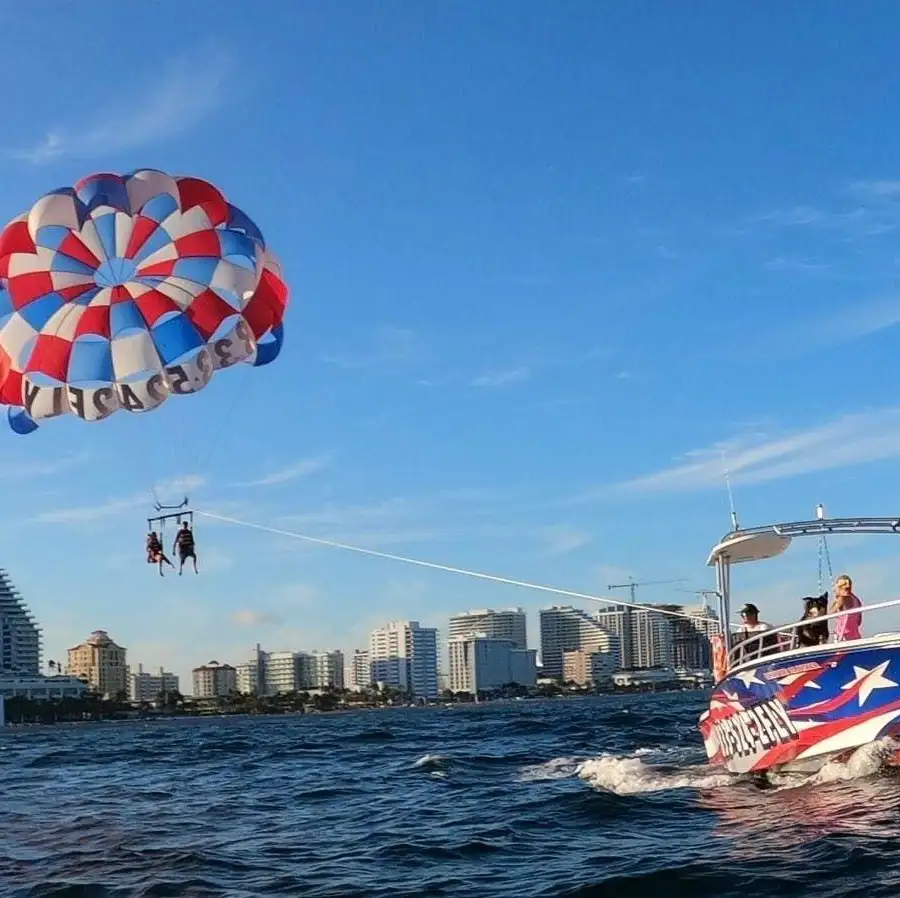
Florida logs more parasail flights each year than any other US state, and the single legal framework governing them was named for a teenager: the White-Miskell Act, passed in 2014 after two Panama City incidents. It set the baselines operators on Fort Lauderdale Beach still work under — commercial liability insurance, a licensed captain, and a hard stop on flying in sustained winds above 20 mph, gusts above 25 mph, or when a thunderstorm sits within seven miles. Anyone researching a parasailing accident fort lauderdale case usually finds those three thresholds at the centre of it. The mechanics matter more than the drama. A parasail is not a parachute; it is a canopy under tension, held aloft by a towline running to a winch boat. Risk concentrates in three places. The towline, which fails under shock loading or from chafe at the splice. The weather, where a Gulf Stream squall can shift wind direction faster than a captain can reel a flier down. And the shoreline, where a loss of tension leaves nowhere soft to land. Harness and canopy failures are comparatively unusual. Most parasailing safety incidents in Florida documented by the US Coast Guard and the National Transportation Safety Board cluster around line condition and sudden weather, not the flier's gear. That shapes what a visitor can actually control. Launches run from Bahia Mar Marina, where boats work a stretch of the Atlantic between the beach and the reef line. The vessels operate with winch systems that keep fliers over water from takeoff to landing, which removes the hardest variable from older beach-launch methods. Captains carry anemometers and are required to abort when readings cross the statutory limits — an aborted flight is a working system, not a wasted booking. Use the answer rather than worrying about it. Ask which boat and captain are assigned, confirm the operator is licensed in Florida, and ask when the towline was last inspected and replaced. Call +1-954-934-3707 or check searocket.com if an operator's credentials are unclear. A reader arriving with those questions reframes the topic entirely: a parasailing accident fort lauderdale search becomes a short pre-flight conversation on the dock, answered in under two minutes, and the flight itself becomes what it should be — eight hundred feet of quiet above the Fort Lauderdale coastline, with the New River inlet and Las Olas sweeping past below.
“An aborted flight is a working system, not a wasted booking.”
The best arrival window is 09:00–12:00 because winds and water conditions are typically calmest in the morning for safer flights. Selecting these hours minimizes exposure to afternoon wind gusts and convective weather patterns that can increase operational risk.
75–85°F, stable winds
Ideal conditions with lower humidity and steady sea breezes.
82–90°F, high humidity
Higher risk of afternoon thunderstorms and choppy water.
75–88°F, cooling trend
Stable weather persists, though monitor for tropical storm activity.
65–78°F, cool breezes
Cooler air with occasional strong cold fronts impacting wind speed.
Verdict: The best time to visit is during the spring or fall months, prioritizing an arrival between 09:00–12:00 to utilize the calmest daily conditions.
Most parasailing incidents trace back to decisions made before the boat leaves the dock, not to the flight itself. Knowing what to verify, what to watch in the sky, and when to listen keeps a Fort Lauderdale Beach flight uneventful.
Booking with an unverified operator found on the sand
Confirm the operator holds a USCG-licensed captain and current Florida commercial parasailing registration before paying. Call +1-954-934-3707 or check https://searocket.com to confirm who you are flying with.
Skipping the pre-flight safety briefing or harness check
Stay for the full briefing and let the crew fit and tighten the harness themselves. Speak up if a strap feels loose once you are standing, not after you are airborne.
Pressuring crew to fly when conditions deteriorate
Accept a crew decision to delay or cancel; gusting wind and building chop are the main accident factors. Rebooking costs an hour, a bad call costs more.
Ignoring hand signals once in the air
Learn the thumbs-up, thumbs-down and wave-off signals during the briefing and use only those. Shouting does not carry over engine and wind noise.
Arriving without knowing where the boat departs from
Go to Bahia Mar Marina, 801 Seabreeze Blvd, Fort Lauderdale, FL 33316 and check in at the dock, not the beach.
Flying with loose glasses, hats, phones or jewellery
Leave everything loose on the boat in a sealed bag. Dropped items at altitude are a hazard to the crew and other water traffic.
Licensed parasailing providers in Fort Lauderdale operate daily to ensure consistent oversight. These hours reflect verified schedules for authorized commercial tours.
Access to Fort Lauderdale Beach is free for the public, as it is a municipal area. Parasailing is a commercial activity that requires payment for individual tour bookings.
Verdict: While beach access is free, individual parasailing fees are determined by the commercial operator based on current tour availability.
Most parasailing incidents trace back to decisions made before you reach the dock, so work through these steps in order.
Everything you need to know about parasailing accident fort lauderdale
Incidents are extremely rare, and professional operators in the area prioritize equipment maintenance and strict adherence to safety standards to prevent any parasailing accident in Fort Lauderdale. Most commercial parasailing tours are operated by experienced crews who monitor weather conditions continuously to ensure passenger security.
Weather plays a critical role in maritime safety, as operators will cancel flights if wind speeds or sea states exceed safe operating limits to mitigate the risk of a parasailing accident in Fort Lauderdale. Booking your flight during the best arrival window of 09:00–12:00 often provides the calmest conditions for a secure experience.
Reputable companies utilize modern winch boats, high-grade harnesses, and redundant safety lines to minimize the chance of a parasailing accident in Fort Lauderdale. These operators are trained to perform regular inspections of all gear before every departure from the Bahia Mar Marina.
Parasailing is generally considered a safe activity for children and families when conducted by licensed, professional crews who follow standardized flight procedures. Operators assess individual readiness and age requirements to ensure that every participant remains safe during the activity.
When researching your Fort Lauderdale beach parasailing tour, ensure the company is fully insured and has a long-standing positive reputation for safety. Checking for professional certifications and current equipment maintenance records helps you choose a reliable operator.
Yes, local authorities and the Coast Guard monitor commercial marine activities, including parasailing, to ensure operators comply with strict safety mandates. This oversight helps maintain the high safety standards expected for all recreational water sports in the region.